

Ausmed is a Trusted Information Partner of Healthdirect Australia. Verify here.


© 2026 Ausmed Pty Ltd (ABN: 33 107 354 441)
Rostering without proper skill visibility is a risk. Ausmed helps providers give their rostering systems the workforce capability intelligence they need to make safer staffing decisions.
A roster is an output. The outcome you are accountable for is safe, stable, participant-centred support, delivered by workers with the right knowledge, skills, competence and experience.
Between those two things sits one question: is this worker the right person to safely support this participant, on this shift, in this home?
Most rostering systems cannot answer it. They can tell you the shift is covered. They cannot tell you the allocation is appropriate. At 150 staff and above, across multiple SIL homes and varied participant needs, that gap stops being an admin annoyance and becomes a clinical governance risk.
Learning and development lead, large multi-service NDIS provider

Rostering systems hold skill tags, but no learning or competency record feeds them. The tag is only as current as the last person who remembered to update it.

Spreadsheet uploads, manually ticked tags and emails asking whether a named worker is competent in a named skill. Partial automation that schedulers describe as unreliable.

High-intensity supports carry a three-month recency expectation. Nobody sees who has lapsed until a roster fails or an auditor asks.

Suitability lives in a coordinator's head. When they are on leave, mid-migration or covering another region, the knowledge is not available to the person filling the shift.

Every unfilled shift ends in a backfill decision made without capability data, leaving staff who are not trained on the support the participant needs.

System changes cost reporting accuracy. Training returns to spreadsheets while rostering and payroll move on, and the two never reconcile again.
For effective skill-based rostering at scale, three categories of information are essential. All three sit inside Ausmed, and connected to your rostering system.
Skill-Based Rostering


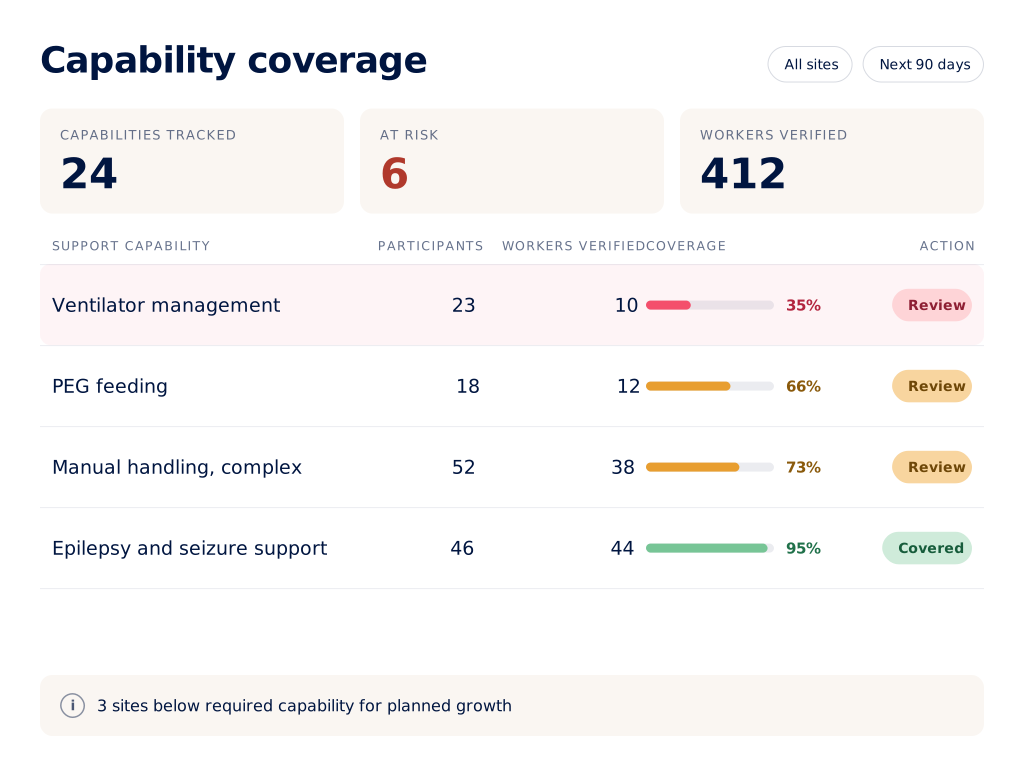
Twenty-three participants requiring ventilator management and ten workers who meet your defined capability requirements is a number you want on a screen, not a number you discover at 6am on a Sunday.
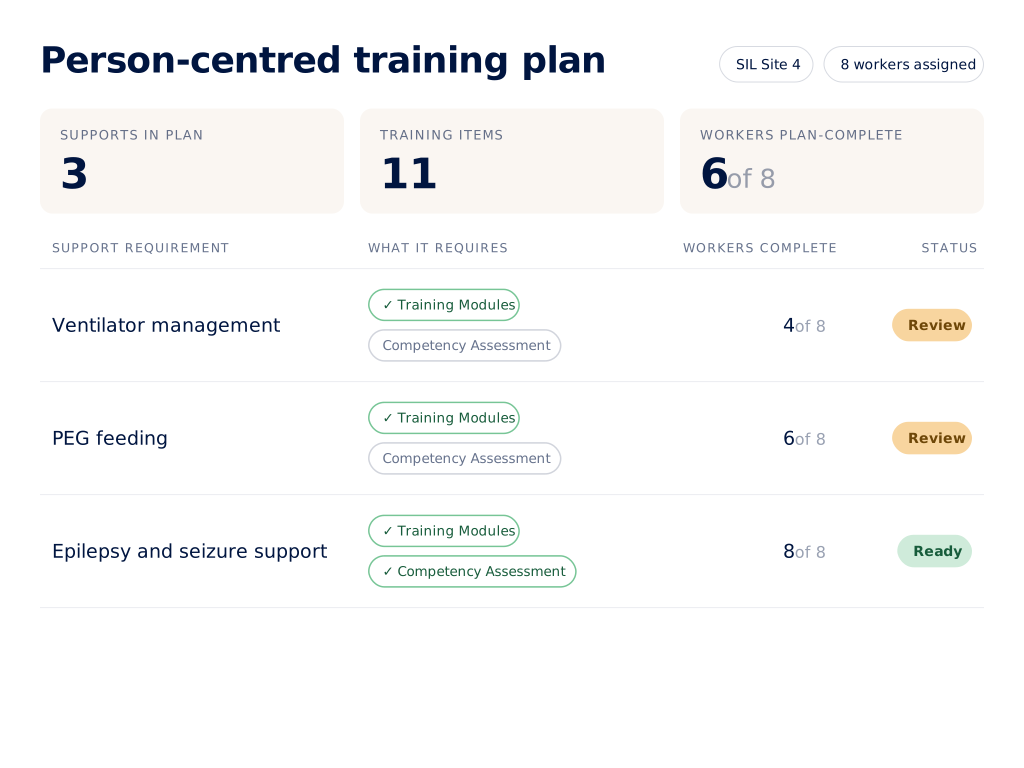
A role-based plan gets a worker to a baseline. It does not establish whether they are trained on what this participant, in this house, actually requires. Build the plan around the person and the standard the roster checks against becomes the one that support genuinely calls for.
Your rostering system stays where it is. Ausmed integrates with it and supplies the worker training, skill, competence and performance information that makes skill-based rostering possible.
In addition, capability is defined by you. The safe support required for each participant need, including the education, verified knowledge, competency assessment, recency and credentials that count, is set by your organisation, with our guardrails.
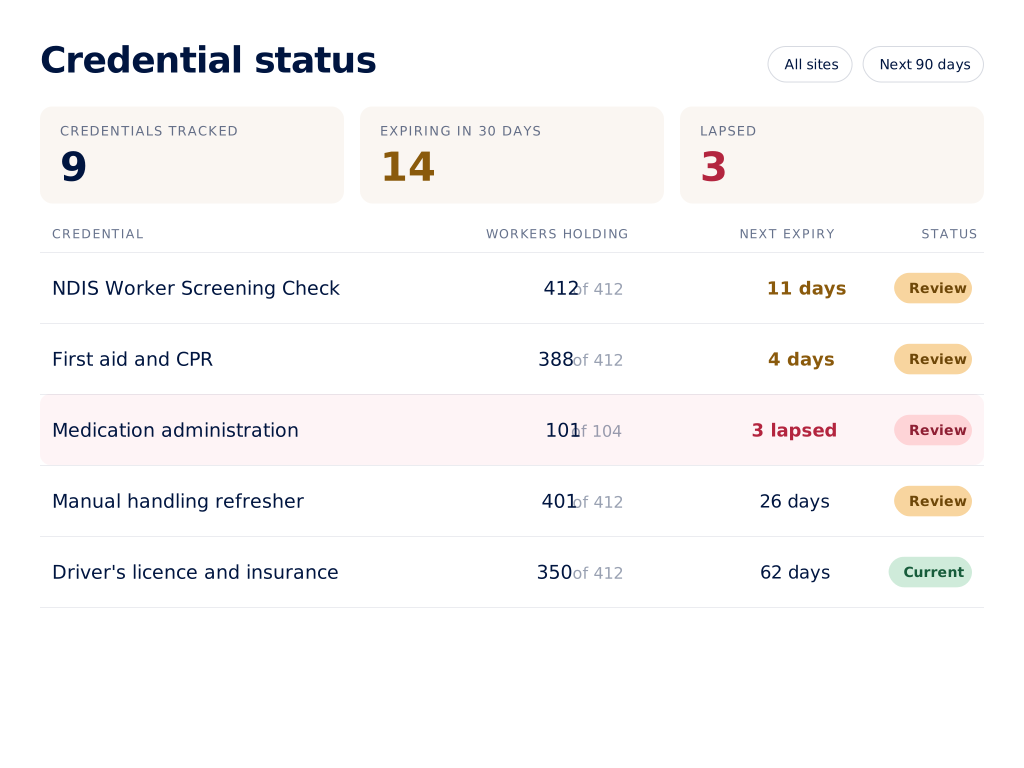
A worker screening check with four days left is a rostering problem before it is an HR one. Ausmed holds every credential a role or a support requires, with the date it stops counting, so the ones about to lapse surface while there is still time to act rather than at the point a shift is being filled.
The same inputs, the same schedulers, the same award conditions. The difference is what the organisation can see at the moment the shift is allocated.
Current rostering approach
Increasing workforce, participant and support complexity across distributed homes.
Skill-based rostering approach
Current rostering approach
Availability, employment type, shift requirements, ratios, award conditions and roster preferences.
Skill-based rostering approach
Current rostering approach
Often manual, spreadsheet-led and dependent on local knowledge.
Skill-based rostering approach
Current rostering approach
A completed roster.
Skill-based rostering approach
Current rostering approach
Shifts are filled, but safety and suitability may remain uncertain.
Skill-based rostering approach
Current rostering approach
Reactive training, overreliance on experienced staff and increased risk during growth or workforce change.
Skill-based rostering approach

Consistent, respectful support from workers who are capable, prepared and matched to their needs, not simply available.
Less likely to be placed beyond their scope, and experienced workers are no longer stretched to cover capability blind spots.

Visibility of where demand for a support exceeds the number of workers assessed as competent, so training lands where it is needed.

A clearer view of workforce risk, capability and participant demand, and more confident decisions about growth, new homes and intake.
Outcome: “Each participant's support needs are met by workers who are competent in relation to their role, hold relevant qualifications, and who have relevant expertise and experience to provide person-centred support.”
Underneath that outcome sits the indicator most providers cannot evidence with confidence:
“A system to identify, plan, facilitate, record and evaluate the effectiveness of training and education for workers is in place to ensure that workers meet the needs of each participant.”
A system. Not a spreadsheet, not a folder of certificates, and not a rostering tag someone remembered to tick. Skill-based rostering is what that indicator looks like when it is operating.
Participant support requirements mapped against verified worker capability, so gaps are visible by support, by home and by region.
Training requirements assigned by role, site and participant need, with recency cycles scheduled rather than remembered.
Learning, knowledge verification and competency assessment delivered to the workers who need them, on the devices they already use.
Completions, assessment sign-offs, credentials and assessment dates held in one place and available to the roster.
Capability coverage reported against participant demand, so you can show an auditor the system works, not just that training happened.
Skill-based rostering demonstrates and operates the requirements of the Human resource management outcome, because the system that produces the roster is the same system that identifies, plans, facilitates, records and evaluates the training behind it.
Read the Core ModuleNo. Ausmed is not a rostering platform and does not try to be one. We integrate with the system you already run and supply the verified capability information it cannot generate on its own: learning, knowledge verification, competency assessment, credentials and recency.
You do. Your organisation sets what safe support requires for each participant need or support activity, which may include relevant education, verified knowledge, competency assessment, recency and required credentials. Ausmed provides the guardrails and the structure to hold that definition consistently across every site.
Training records matter, but they do not independently demonstrate that a worker can safely apply knowledge and skill in practice. Competency assessment, supervision and recency are all part of the picture, which is why capability data has to combine them rather than report completions alone.
No, and that is not the goal. What you need is an appropriate skill mix: a deliberate distribution of experienced and capable workers across homes and shifts, with safe conditions for less experienced workers to develop.
The NDIS Practice Standards Core Module requires a system to identify, plan, facilitate, record and evaluate the effectiveness of training and education for workers, so that workers meet the needs of each participant. A live view of participant demand against verified workforce capability is direct evidence that such a system is in place and operating.
Ausmed is a Trusted Information Partner of Healthdirect Australia. Verify here.